Varanasi's Divine Embrace
In the ancient spiritual heart of Varanasi, Maha Shivratri pulses with an unparalleled intensity. Devotees commence the sacred day with a purifying dip
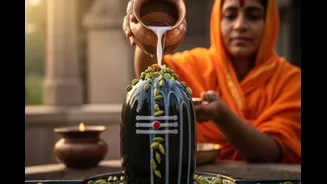
in the holy River Ganga, subsequently proceeding to the revered Kashi Vishwanath Temple. Throughout the entire day and night, a continuous stream of offerings – comprising milk, water, honey, and the sacred bael leaves – are presented to the Shiva Lingam. The city becomes a living testament to devotion, echoing with incessant chants and soul-stirring devotional songs as adherents engage in a continuous night vigil, an observance that mirrors Shiva's eternal consciousness and presence.
Himachal's Grand Fair
Himachal Pradesh transforms Maha Shivratri into a magnificent cultural spectacle, with Mandi leading the celebrations. The Mandi Shivratri Fair extends over several days, featuring the grand procession of local deities from neighboring villages. These revered figures are transported in elaborately decorated palanquins to the Bhootnath Temple, creating a vibrant and colorful display. The festivities are amplified by traditional folk dances and communal gatherings, embodying the profound belief that all divine energies converge to venerate Lord Shiva. This celebration also serves to significantly strengthen the bonds of community spirit among the people.
Kashmiri Pandit Herath
Among the Kashmiri Pandit community, Maha Shivratri is celebrated as 'Herath,' predominantly as a family-centric festival. In contrast to many other regions where temple worship takes precedence, Herath's significant rituals are primarily conducted within the sanctity of homes. Special earthen pots, artfully filled with water, walnuts, and flowers, are reverently worshipped as symbolic representations of Lord Shiva and Goddess Parvati. Following these solemn rituals, a traditional feast is shared, reflecting a more introspective and personal form of devotion that emphasizes prosperity and heartfelt gratitude.
Tamil Nadu's Sacred Trek
In Tamil Nadu, Maha Shivratri is intrinsically linked with the worship of Lord Shiva in his form as divine fire. A central ritual is the 'Girivalam,' a spiritual circumambulation performed barefoot around the sacred Arunachala Hill, covering an arduous distance of approximately 14 kilometers. Many undertake this challenging walk during the night, believing it to be a powerful means of cleansing past karmas and attaining profound inner peace. This pilgrimage evolves into a moving meditation, far transcending a mere ritual, with lamps and devotional chants illuminating the path and guiding the devotees.
Karnataka's Night Vigil
Across parts of Karnataka, Maha Shivratri is observed with 'jagarana,' a night-long vigil characterized by devotional singing and the recounting of sacred stories. In significant pilgrimage sites like Gokarna, renowned for its Mahabaleshwar Temple, devotees first partake in ritualistic baths in the sea before offering their prayers. The night also comes alive with the performance of traditional folk dances, such as the energetic 'Veeragase,' which is dedicated to Lord Shiva and powerfully reflects his dual nature as both a formidable and compassionate deity.
Maharashtra's Austere Devotion
In Maharashtra, Maha Shivratri is observed with a strong emphasis on strict fasting and disciplined worship. Many devout followers undertake a 'nirjala' fast, abstaining from both food and water for the entire duration. Temples meticulously organize special 'abhishekam' rituals, involving the ceremonial anointment of the Shiva Lingam with a sacred mixture of milk, curd, honey, sugarcane juice, and water. In rural communities, the air resonates with the singing of 'abhangas' and 'bhajans,' melodies that praise Shiva as the supreme yogi and highlight the virtues of self-control, unwavering devotion, and complete surrender.
West Bengal's Dual Worship
In West Bengal, the observance of Maha Shivratri often incorporates the worship of Goddess Shakti alongside Lord Shiva. Devotees direct their prayers to both Shiva and Goddess Parvati, seeking blessings for marital harmony and strong family bonds. Many women meticulously observe fasts, praying for the well-being of their husbands, while unmarried women seek divine guidance for suitable life partners. These rituals beautifully illustrate Shiva's multifaceted role, not merely as a renouncer but also as a beloved householder and a protective guardian.