Unpacking Vada Pav's Origins
The seemingly quintessential Mumbai snack, the vada pav, holds a secret: its roots are not entirely local. Anthropologist Kurush F Dalal illuminates how
this beloved street food is a product of migration and culinary adaptation. He explains that key components, like the soft 'pav' (bread) and the potato filling, owe their presence in India to Portuguese traders who arrived centuries ago. The word 'pav' itself is derived from the Portuguese term for bread. This cross-cultural exchange didn't end there; chillies and peanuts, integral to the vada pav's flavour profile, also made their journey to India through these ancient trade routes. Dalal emphasizes that food, much like cities, is a dynamic entity that evolves and integrates foreign elements, a process Mumbai has mastered exceptionally well.
Mumbai's Culinary Alchemy
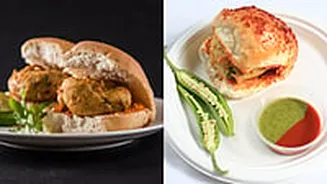
Mumbai, a bustling port city with a rich history of welcoming traders, workers, and settlers, possesses a unique talent for assimilation. This innate ability to adapt, simplify, and innovate is precisely what allowed it to transform foreign ingredients into the vada pav, its most iconic street snack. Dalal suggests that while history provided the foundational elements, it was the vibrant street culture of Mumbai that truly perfected the dish. The fiery red chilli-peanut thecha, the complementary fried green chillies, and the comforting pav that encases it all, each tell a story of movement and exchange. This culinary alchemy, where diverse influences coalesce into something uniquely Mumbaikar, is a testament to the city's enduring spirit of creating something new and beloved from a tapestry of origins.
A Taste of History
The vada pav serves as a powerful metaphor for the broader concept of food as a living link to civilization, as articulated by Dalal. He points to other ancient Indian foods that have endured through millennia, such as malpua, a fried cake often dipped in honey, with variations mentioned in the Rig Veda. Similarly, kheer, a rice pudding, exists in numerous forms across South Asia, from Muslim communities' sevai-based versions to Sri Lanka's kiribath (milk rice). These examples underscore Dalal's central argument: food possesses an extraordinary capacity to travel, adapt to new environments, and persist through time. This resilience and adaptability of culinary traditions mirror the enduring nature of human civilization itself, demonstrating how sustenance also carries cultural memory.
Food as Identity and Connection
Dalal's personal experiences further solidify the idea that food transcends borders and identities. He recounts a memorable, unplanned stop in Chitradurga, where a small, Kannada-only eatery served an exceptional non-vegetarian meal. The honesty of a simple sign stating, 'Only non veg,' resonated deeply with him, highlighting food’s ability to communicate its essence directly. In a country where food often becomes a point of division and a marker of identity, Dalal's reflections offer a grounding perspective. His insights suggest that embracing the diverse origins and adaptive nature of food can foster a more inclusive understanding, much like how Mumbai itself, built on arrivals, has integrated newcomers into its very fabric – including the humble yet globally-rooted vada pav.