Practical Beginnings
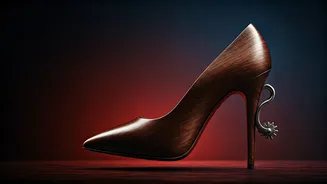
The high heel's story doesn't start with glamour, but with sheer utility. In 15th-century Persia, cavalry riders adopted heels as a crucial component for
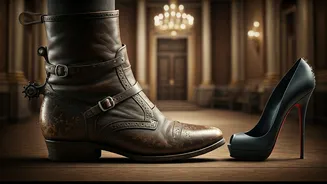
horseback riding. These early designs, integrated into boots, helped secure their feet firmly in stirrups, providing much-needed stability during equestrian combat. This functional innovation laid the groundwork for future footwear developments, even becoming a direct ancestor to the modern cowboy boot. It wasn't until centuries later that the aesthetic appeal of elevated footwear began to take hold in various cultures, eventually shedding its purely practical roots.
Status and Sophistication
Moving into 15th to 17th century Europe, particularly in Spain, women started wearing thick cork and wooden platform shoes known as chopines. These were initially designed to keep their feet dry and clean from the muddy streets. As this trend traveled to Venice, influenced by Persian visitors, the platforms grew significantly taller. Adorned with luxurious materials like velvet, these shoes deliberately slowed movement, turning walking into a more deliberate and stately display. Simultaneously, European aristocrats, including men, began adopting heels as visible markers of their considerable wealth and high social standing. The impracticality of such footwear subtly communicated a life free from manual labor, a clear indicator of privilege supported by servants or carriages, thus elevating height itself into a symbol of status.
Global Elevation Concepts
The concept of elevated footwear wasn't confined to Europe. Across the globe, diverse cultures developed their own interpretations of lifting the wearer off the ground, transforming movement into a form of cultural expression. In Japan, the wooden geta and intricately lacquered okobo were not just footwear but tools that turned walking into rhythmic sounds and ceremonial acts. Similarly, the Ottoman kabkabs, worn in bathhouses, artfully blended practical function with ornate decoration. Though not high heels in the modern sense, these diverse designs expanded the global imagination regarding how elevated footwear could embody cultural identity and ceremony.
Power and Precision
By the 1600s, heels had solidified their role as symbols of authority and dominance, most famously exemplified by Louis XIV of France. He frequently wore four-inch heels, and famously reserved the use of red soles for members of his court, effectively creating a visual hierarchy through footwear. A pivotal moment in heel evolution arrived in the 1850s with the industrial breakthrough of the steel shank. This innovation revolutionized shoe construction, allowing for unprecedented height while maintaining crucial stability. This technological leap paved the way for the development of slender heels and eventually the iconic stiletto. Later, in the 20th century, designers like Salvatore Ferragamo experimented with lighter materials such as cork for wedges and introduced transparent sandals in the 1940s, focusing on balance and reduced weight. In 1954, Roger Vivier masterfully merged engineering with high fashion to introduce the modern stiletto heel.
Reinvention and Expression
The 1970s witnessed a resurgence of platform shoes, fueled by the vibrant energy of glam rock, disco culture, and the expressive world of queer nightlife. During this era, increased height became an integral part of theatrical performance and a bold declaration of identity. Moving into the 2000s, Christian Louboutin's iconic red sole redefined the high heel as a coded symbol of luxury, proving that a distinctive color alone could signify status without the need for overt branding. The Margiela Tabi heel, inspired by Japanese workwear and reintroduced in 2010, gained cult status, becoming a marker of fashion sophistication and insider knowledge. Alexander McQueen's striking Armadillo boots in 2010 pushed the boundaries of footwear, transforming heels into pieces of wearable art that blurred the lines between fashion and sculpture, notably adopted by Lady Gaga and signaling fashion's embrace of the spectacular and avant-garde. Designers like Prada and Miu Miu, throughout the 1990s and into the 2020s, continued to innovate, with Prada employing industrial geometry and Miu Miu exploring playful proportions, collectively reframing femininity as intelligent, ironic, and self-aware.