
'%3e%3cpath%20fill-rule='evenodd'%20clip-rule='evenodd'%20d='M6%200C10.4183%200%2014%203.58171%2014%207.99999V14.0003C14%2018.4186%2017.5817%2022.0003%2022%2022.0003H122C126.418%2022.0003%20130%2018.4186%20130%2014.0003V8C130%203.58172%20133.582%200%20138%200H6Z'%20fill='%23EDF2E7'/%3e%3c/g%3e%3cdefs%3e%3cfilter%20id='filter0_d_12223_4749'%20x='0'%20y='0'%20width='144'%20height='36'%20filterUnits='userSpaceOnUse'%20color-interpolation-filters='sRGB'%3e%3cfeFlood%20flood-opacity='0'%20result='BackgroundImageFix'/%3e%3cfeColorMatrix%20in='SourceAlpha'%20type='matrix'%20values='0%200%200%200%200%200%200%200%200%200%200%200%200%200%200%200%200%200%20127%200'%20result='hardAlpha'/%3e%3cfeOffset%20dy='8'/%3e%3cfeGaussianBlur%20stdDeviation='3'/%3e%3cfeComposite%20in2='hardAlpha'%20operator='out'/%3e%3cfeColorMatrix%20type='matrix'%20values='0%200%200%200%200.356863%200%200%200%200%200.427451%200%200%200%200%200.270588%200%200%200%200.7%200'/%3e%3cfeBlend%20mode='normal'%20in2='BackgroundImageFix'%20result='effect1_dropShadow_12223_4749'/%3e%3cfeBlend%20mode='normal'%20in='SourceGraphic'%20in2='effect1_dropShadow_12223_4749'%20result='shape'/%3e%3c/filter%3e%3c/defs%3e%3c/svg%3e)
Practical Beginnings
Contrary to popular belief, high heels weren't initially conceived for glamour. Their earliest known appearances trace back to 15th-century Persia, where
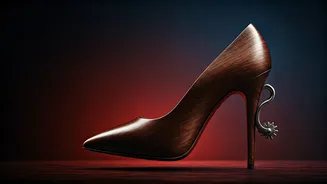
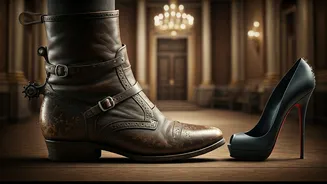
cavalry riders utilized them to maintain a secure footing in their stirrups, enhancing stability during horseback engagements. This practical design is often recognized as a direct precursor to the modern cowboy boot. It wasn't until centuries later that this utilitarian feature began to be adopted and reinterpreted through a fashion lens, demonstrating how function can pave the way for future aesthetics. The initial purpose was purely about utility and control, a far cry from the decorative and status-driven roles they would later assume.
Status and Elevation
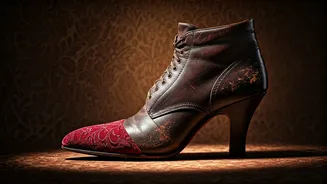
As the concept of elevated footwear traveled to Europe in the 15th to 17th centuries, its function began to intertwine with social signaling. In Spain, women initially wore chopines crafted from cork and wood, a practical solution for navigating the muddy streets of the time. When this trend reached Venice, influenced by Persian interactions, the platforms grew considerably taller. These were often adorned with opulent materials like velvet, and their significant height naturally slowed down movement, turning each step into a deliberate, almost ceremonial display. Across Europe, aristocrats, including men, began adopting heels as clear indicators of their affluence and elevated social standing, symbolizing a life removed from strenuous physical labor and supported by others, thus making height a visible marker of privilege.
Global Height Echoes
The idea of elevated footwear wasn't confined to Europe; it resonated globally with varying functions and aesthetics. In Japan, traditional wooden footwear like the geta and lacquered okobo transformed walking into a rhythmic experience, often accompanied by the sound of their movement, and were integrated into ceremonial practices. Similarly, in the Ottoman Empire, footwear such as kabkabs combined the practical use within bathhouses with intricate ornamentation, blending utility with decorative flair. While not strictly high heels, these diverse designs significantly broadened the imagination of how footwear could serve as a form of cultural expression and elevate the wearer, showcasing a universal human inclination towards augmentation through dress.
Power and Engineering
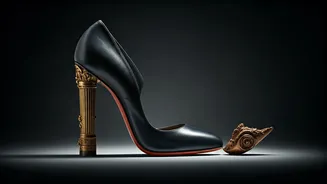
By the 17th century, heels had firmly established themselves as potent symbols of authority and dominance. King Louis XIV of France, a prominent figure in this trend, famously favored heels measuring four inches high and implemented a rule that only members of his court could wear red-soled shoes. This created a distinct visual hierarchy, reinforcing the idea that footwear could signify one's place within a powerful structure. A significant technological leap occurred in the 1850s with the invention of the steel shank. This innovation revolutionized shoe construction, allowing for much greater heights while maintaining crucial stability. This breakthrough was instrumental in the development of slender heels and the iconic stiletto, forever changing the silhouette and possibilities of heeled footwear.
Modern Forms Emerge
The 20th century saw remarkable innovation and diversification in heel design. Visionary designers pushed the boundaries of what was possible with footwear. In the 1940s, Salvatore Ferragamo experimented extensively with lighter materials like cork, creating innovative wedge heels and even transparent sandals that played with lightness and balance. Later, in 1954, Roger Vivier achieved a groundbreaking fusion of engineering precision and refined elegance with the introduction of the modern stiletto heel, a design that remains influential to this day. The 1970s witnessed a resurgence of platform heels, heavily popularized by glam rock bands, the disco scene, and underground queer nightlife, where exaggerated height became a vital component of theatrical self-expression and solidified personal identities.
Cultural Language Blooms
In recent decades, high heels have transcended mere fashion accessories to become potent vehicles for cultural commentary and individual expression. The iconic red sole, introduced in the 2000s, became a globally recognized symbol of luxury, so distinct that it communicated status and brand recognition without the need for explicit logos. The Margiela Tabi heel, initially inspired by Japanese workwear and re-emerging in the 2010s, evolved into a cult favorite, signifying fashion connoisseurship and an appreciation for avant-garde design. Alexander McQueen’s dramatic Armadillo boots in 2010 pushed heels into the realm of wearable art and transformation, famously embraced by artists like Lady Gaga, embodying fashion's embrace of spectacle and the exploration of posthuman forms. Contemporary designers continue to redefine femininity and style, with brands like Prada and Miu Miu using innovative geometry and playful proportions to create heels that are both thoughtfully ironic and self-aware.