HbA1c's Indian Challenge
A significant piece of research published in The Lancet Regional Health: Southeast Asia has brought to light potential inaccuracies in the widely adopted
glycated haemoglobin (HbA1c) test when applied to the Indian populace. This test, commonly used to gauge average blood sugar levels over a two to three-month period, relies on measuring glucose attached to haemoglobin. While generally accepted thresholds exist—below 5.7% for normal, 5.7%–6.4% for prediabetes, and 6.5% or above for diabetes—the study posits that these readings can be deceptive in India. This is largely attributed to the high prevalence of conditions such as anaemia, inherited haemoglobin disorders, and enzyme deficiencies like G6PD deficiency, all of which can interfere with haemoglobin's structure or red blood cell lifespan. Consequently, the HbA1c value might not truly reflect an individual's actual blood glucose status, leading to potential misdiagnosis or delayed treatment for type-2 diabetes, and consequently, a distorted view of the nation's overall diabetes burden. Professor Anoop Misra, leading the study, emphasizes that exclusive reliance on HbA1c can misclassify individuals, impacting timely intervention and effective disease management.
Understanding The Discrepancy
The fundamental issue stems from the very nature of the HbA1c test, which is intrinsically linked to haemoglobin. Any factor that alters the red blood cells – their quantity, their chemical makeup, or how long they survive – can skew the test results. In India, conditions like iron-deficiency anaemia, which affects a substantial portion of the population (over 50% in some regions according to 2025 data), can significantly lower or elevate HbA1c readings, making them unreliable indicators of blood sugar. Similarly, inherited blood disorders are more common in certain Indian communities. For instance, men with undiagnosed G6PD deficiency, a condition prevalent in some Indian groups, might see their diabetes diagnosis delayed by as much as four years if relying solely on HbA1c, thereby increasing their risk of long-term complications. This inaccuracy isn't confined to rural or underserved areas; even in urban hospitals with better resources, variations in red blood cells and genetic haemoglobin traits can influence HbA1c outcomes, with discrepancies potentially being even more pronounced in regions where anaemia and other red cell abnormalities are more widespread. This highlights a critical flaw in using a single metric without considering the specific physiological landscape of the population.
Beyond HbA1c: A New Approach
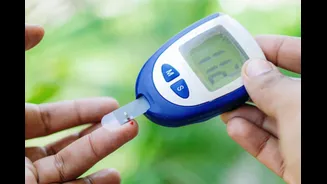
Given these significant limitations, the study advocates for a more robust and diversified approach to diabetes diagnosis and management in India. The authors propose a framework that adapts to varying healthcare settings. In resource-limited areas, the oral glucose tolerance test (OGTT) should be the primary diagnostic tool, utilizing both fasting blood glucose and a two-hour reading after a glucose load. For monitoring in these settings, self-monitoring of blood glucose a few times a week, coupled with basic blood tests like haemoglobin levels and a peripheral blood smear, is recommended. In more advanced medical facilities, HbA1c should only be used in conjunction with OGTT for initial diagnosis. For ongoing monitoring, continuous glucose monitoring (CGM) and alternative markers like fructosamine should be considered alongside HbA1c. Furthermore, when HbA1c results appear questionable, comprehensive investigations such as iron studies, haemoglobin electrophoresis, and quantitative G6PD testing are crucial for clarification. This multi-pronged strategy ensures that diabetes diagnosis and management are personalized and accurate, especially for individuals in populations susceptible to anaemia and haemoglobinopathies, thereby offering a more reliable assessment of the national diabetes burden.