A New Lunar Chapter
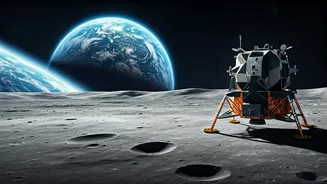
The year 2026 is projected to be a pivotal moment for human spaceflight, largely due to the anticipated return to the Moon. This upcoming era, exemplified
by NASA's Artemis 2 mission, represents a significant evolution from the pioneering Apollo missions. It signifies a strategic shift in how nations approach lunar exploration, moving beyond the initial race to land and towards establishing a sustained presence and conducting more complex scientific research. Unlike the Cold War-driven Apollo program, today's lunar ambitions are shaped by a global context of both cooperation and competition, involving an increasing number of international partners and private entities. This new phase also grapples with contemporary challenges, such as the growing problem of space debris that poses a threat to orbital operations and future missions. The renewed focus on the Moon is not just about scientific discovery; it's also about testing technologies and operational strategies that will be crucial for longer-duration missions, including eventual voyages to Mars, a concept gaining traction and even inspiring speculative discussions about human adaptation to Martian environments.
Private Sector's Ascent
The modern space exploration landscape is increasingly defined by the significant contributions of private companies, a stark contrast to the government-led endeavors of the past. Companies like SpaceX are at the forefront, with their reusable rocket technology playing a crucial role in making space access more frequent and cost-effective. NASA's reliance on these commercial partners for crucial missions, such as astronaut launches to the International Space Station (ISS) via the Falcon 9 rocket, highlights this paradigm shift. The FAA's clearance for the Falcon 9 to fly again after technical issues underscores the ongoing development and stringent safety protocols required for these vital launch vehicles. This partnership model allows government agencies to focus on pioneering research and exploration, while private firms handle the logistical and operational challenges of frequent space access. It’s this dynamic interplay between public ambition and private innovation that is accelerating the pace of space exploration and opening up new possibilities for lunar and interplanetary missions.
Challenges and Future Horizons
As humanity sets its sights back on the Moon and beyond, critical challenges must be addressed to ensure the success and sustainability of space endeavors. The issue of space debris, highlighted by an orbital emergency in 2025, underscores the urgent need for improved space traffic management and debris mitigation strategies. Furthermore, the long-term prospect of human life beyond Earth, whether on the Moon or Mars, necessitates innovative solutions for healthcare and basic human needs. Scientists are exploring practical approaches, such as sending menstrual cups to space to understand and manage biological processes in microgravity, and considering the potential physiological and evolutionary changes humans might undergo on other planets. The discovery of precursors to the building blocks of life by the James Webb Space Telescope also fuels the scientific imperative to explore celestial bodies, as lunar landings, for instance, could inadvertently contaminate evidence vital to understanding the origins of life on Earth.