Early Black Hole Beginnings
The James Webb Space Telescope (JWST) has provided an unprecedented glimpse into the nascent universe, offering a new perspective on how the very first
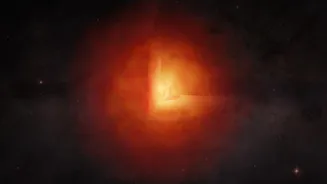
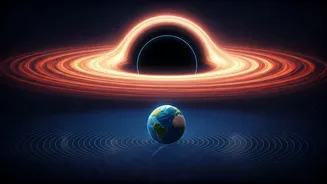
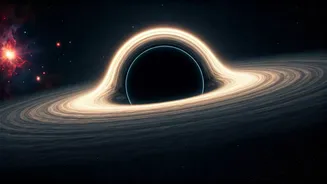
supermassive black holes came into being. Astronomers are re-evaluating existing models as JWST's powerful instruments detect these colossal objects forming much earlier and more rapidly than previously theorized. This cosmic rewind is challenging our comprehension of galaxy evolution and the fundamental forces that governed the early cosmos. The telescope’s sensitive infrared vision allows it to peer through dust and gas, revealing distant, ancient light that has traveled for billions of years. Early JWST observations have identified what appear to be mature supermassive black holes in galaxies that existed when the universe was just a fraction of its current age, prompting a significant rethink of black hole growth mechanisms and their role in shaping early galactic structures. This discovery suggests that the seeds of these behemoths may have been planted sooner or that their growth processes were far more efficient than current simulations predict, pushing the boundaries of cosmological understanding.
Dark Matter's Hidden Hand
The enigmatic nature of dark matter continues to be a central puzzle in cosmology, and the James Webb Space Telescope is offering fresh avenues for investigation. By mapping the distribution of dark matter across vast cosmic scales and observing its influence on the light from distant galaxies, JWST is providing the clearest and most detailed maps of the dark universe to date. These observations are testing alternative theories, such as gravity behaving differently than predicted by Einstein's theories, as a potential explanation for dark matter's effects. Furthermore, JWST's sensitivity to faint light has enabled astronomers to scrutinize the properties of dark matter, with new theories proposing it might be composed of exotic, massive particles or even remnants of colossal, unknown cosmic entities. The ongoing quest to directly detect or indirectly infer the presence of dark matter particles through their interactions or lack thereof with ordinary matter is being significantly bolstered by JWST's advanced capabilities, painting a more complete picture of this invisible cosmic scaffolding.
Galactic Wonders Unveiled
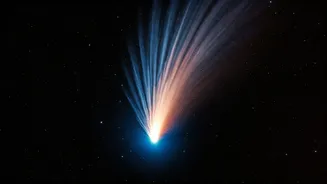
Beyond the study of black holes and dark matter, the James Webb Space Telescope is revealing a breathtaking array of galactic phenomena, pushing the frontiers of astronomical discovery. JWST has identified the earliest and hottest galaxy clusters ever observed, objects that defy current cosmological models and suggest a more dynamic early universe than anticipated. Its keen eye has also detected precursors to the building blocks of life in nearby galaxies, hinting at the widespread potential for life beyond Earth. The telescope has captured stunning visuals of interstellar visitors, like comet 3I/ATLAS flaring up as it traversed our solar system. Moreover, JWST’s observations of ancient light from over 800,000 galaxies are not only detailing dark matter distribution but also providing a richer understanding of the evolutionary pathways of galaxies across cosmic time, from their initial formation to their complex structures today. These discoveries collectively underscore the transformative power of JWST in expanding our cosmic horizons.