
'%3e%3cpath%20fill-rule='evenodd'%20clip-rule='evenodd'%20d='M6%200C10.4183%200%2014%203.58171%2014%207.99999V14.0003C14%2018.4186%2017.5817%2022.0003%2022%2022.0003H122C126.418%2022.0003%20130%2018.4186%20130%2014.0003V8C130%203.58172%20133.582%200%20138%200H6Z'%20fill='%23EDF2E7'/%3e%3c/g%3e%3cdefs%3e%3cfilter%20id='filter0_d_12223_4749'%20x='0'%20y='0'%20width='144'%20height='36'%20filterUnits='userSpaceOnUse'%20color-interpolation-filters='sRGB'%3e%3cfeFlood%20flood-opacity='0'%20result='BackgroundImageFix'/%3e%3cfeColorMatrix%20in='SourceAlpha'%20type='matrix'%20values='0%200%200%200%200%200%200%200%200%200%200%200%200%200%200%200%200%200%20127%200'%20result='hardAlpha'/%3e%3cfeOffset%20dy='8'/%3e%3cfeGaussianBlur%20stdDeviation='3'/%3e%3cfeComposite%20in2='hardAlpha'%20operator='out'/%3e%3cfeColorMatrix%20type='matrix'%20values='0%200%200%200%200.356863%200%200%200%200%200.427451%200%200%200%200%200.270588%200%200%200%200.7%200'/%3e%3cfeBlend%20mode='normal'%20in2='BackgroundImageFix'%20result='effect1_dropShadow_12223_4749'/%3e%3cfeBlend%20mode='normal'%20in='SourceGraphic'%20in2='effect1_dropShadow_12223_4749'%20result='shape'/%3e%3c/filter%3e%3c/defs%3e%3c/svg%3e)
Surviving Without Oxygen
In the depths of winter, many bodies of water become covered in ice, and the availability of oxygen diminishes, creating a challenging environment for
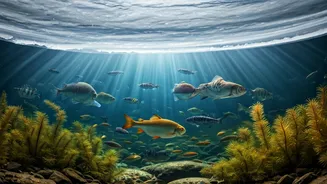
aquatic life. The fish that inhabit these waters have evolved extraordinary abilities to survive under these harsh conditions. One of the most critical adaptations is the ability to cope with extremely low oxygen levels. These fish can survive in environments where oxygen is scarce or completely absent. To achieve this, some fish reduce their activity levels, slowing down their metabolism and conserving energy. This allows them to use less oxygen and survive longer. Their bodies undergo various changes, from their metabolic processes to the way they extract oxygen, to manage the demands of the environment. Different species have developed various techniques to survive. Some breathe through their skin, some have developed mechanisms to utilize the little oxygen present in their surroundings efficiently, while others are capable of anaerobic respiration, breaking down glucose without oxygen. This metabolic shift is crucial for their survival during prolonged periods of low oxygen availability.
Metabolic Slowdown Tactics
Another key survival tactic is the ability to slow down their metabolism. When faced with freezing temperatures and oxygen scarcity, fish reduce their need for energy by slowing their metabolic rate. This reduces the amount of oxygen they need, conserving precious resources. The slowed metabolism also helps them conserve energy, allowing them to survive for extended periods with minimal food intake. This is analogous to hibernation in mammals, where animals enter a state of dormancy to conserve energy during times of scarcity. Moreover, this metabolic slowdown reduces the build-up of waste products in their bodies. This is because fewer chemical reactions are taking place, meaning fewer toxic by-products need to be dealt with. The fish's bodies also become more efficient in their chemical processes. These modifications are essential for them to weather the challenges imposed by winter's environmental conditions. The slower the metabolism, the less energy the fish requires, which further increases its chances of surviving the oxygen-deprived period.
Unique Anatomical Adaptations
Beyond metabolic changes, these fish also possess a range of anatomical adaptations that aid in their survival. Some species have developed specialized gills that are more efficient at extracting oxygen from water. The structure of their gills and blood vessels may differ to optimize oxygen uptake. Certain fish have also developed ways to breathe through their skin or other body parts. This alternative breathing method enables them to extract oxygen from the surrounding environment when it is scarce. The blood composition of these fish also plays a key role. They might possess hemoglobin variations that have an enhanced ability to bind with oxygen. This adaptation ensures that even the smallest amounts of oxygen in the water can be effectively utilized. These anatomical adaptations are crucial for survival during the harsh winter months, helping them to effectively utilize the limited oxygen available. The evolutionary pressures of their environment have led to these incredible physical traits, making them well-suited for winter survival.
Environmental Influences
The environment itself plays a crucial role in these fish's survival, especially in winter. The type of body of water, its depth, and how it freezes all significantly impact the available oxygen and how long it lasts. Lakes, for example, tend to freeze from the top down, creating an ice layer that blocks sunlight and prevents oxygen from entering the water. In shallower waters, the effects of ice cover and oxygen depletion are more severe. The fish's survival depends on the ecosystem's resilience and its oxygen replenishment capabilities. Factors like water currents or the presence of plants can help introduce oxygen. The interaction between the fish, their habitat, and the weather determines whether they can successfully navigate the winter. In some ways, these fish have a symbiotic relationship with their aquatic environment, relying on it for sustenance, protection, and the right conditions to survive.
Species-Specific Strategies
Various fish species have evolved their unique strategies to endure winter conditions. Some common adaptations include storing glycogen, a type of stored glucose, in the liver. This provides them with a readily available source of energy when food is scarce. Some species enter a state of dormancy or reduced activity. Others alter their behavior, moving to deeper, less frozen areas to increase their chances of survival. These behavioral adaptations and physiological changes collectively enhance survival rates during harsh periods. The differences in strategies across species illustrate the adaptability of these fish. These approaches are specific to environmental conditions. They demonstrate the remarkable resilience of aquatic life, showcasing how different species have adapted to their local environmental challenges. These adaptive traits are a testament to the evolutionary power and the diversity of life in various ecosystems.