Asperitas: A Turbulent Sky
Prepare to be captivated by Asperitas clouds, a relatively newly recognized cloud type officially acknowledged in 2017. These formations present a dramatically
turbulent appearance, resembling an agitated sea viewed from below. Their underside is characterized by a chaotic, wave-like texture, creating a profoundly unsettling yet mesmerizing visual. The phenomenon of Asperitas arises from complex atmospheric dynamics, often associated with instability, leading to these strikingly rough and undulating cloudscapes that defy the typical serene sky. Their unusual nature makes them a truly remarkable sight, offering a glimpse into the more dramatic possibilities of atmospheric conditions.
Fallstreak Holes' Ethereal Gaps
Imagine perfect, circular gaps appearing in an otherwise uniform cloud layer – this is the phenomenon of Fallstreak Holes, also known as hole punch clouds. This peculiar sight occurs when ice crystals within a supercooled cloud layer suddenly begin to fall. As these crystals descend, they create a chain reaction, causing surrounding water droplets to freeze and also fall. The result is a remarkably clear, often symmetrical void that looks almost artificially created, defying the natural randomness one might expect from cloud formations. Their appearance is a beautiful, albeit strange, testament to the specific conditions required for their formation.
Kelvin-Helmholtz Waves
Named after the scientific principle they embody, Kelvin-Helmholtz clouds are a fleeting and rare spectacle that mimics the appearance of breaking ocean waves. These magnificent formations arise when two layers of air at different speeds interact. The faster-moving upper layer shears over the slower-moving lower layer, creating a distinct wave pattern. This shear instability results in the characteristic curl and crest that are so reminiscent of ocean surf. Due to the precise atmospheric conditions required for their creation, Kelvin-Helmholtz clouds are exceptionally transient, making any sighting a particularly special event for observers.
Lenticular's Saucer Shapes
Often mistaken for extraterrestrial craft, Lenticular clouds possess a strikingly smooth, lens-like shape, frequently appearing stacked one atop another. These clouds typically form over or near mountainous regions. As stable, moist air flows across the peaks, it is forced upwards and cools, leading to condensation and cloud formation. The constant flow of air over the terrain allows these clouds to maintain their distinct, stationary appearance. Their polished, almost solid look is a remarkable manifestation of air currents interacting with topography, presenting a vision that has sparked countless UFO narratives.
Mammatus' Pouch-like Hangings
Mammatus clouds are instantly recognizable by their distinctive pouch-like structures that hang precariously beneath a larger cloud formation. These formations are most commonly observed in the aftermath of intense thunderstorms, a sign that the turbulent conditions may be subsiding. They are thought to form when cold, moist air sinks back down into warmer, drier air, creating these bulbous shapes. The eerie and unusual appearance of mammatus clouds, often illuminated by sunlight, makes them a memorable and striking feature of the sky, hinting at the complex dynamics within storm systems.
Noctilucent's Twilight Glow
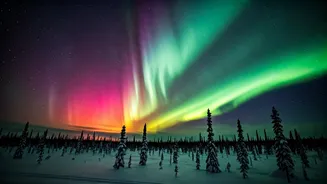
Gracing the highest reaches of our atmosphere, Noctilucent clouds offer a breathtaking display of celestial light. These rare clouds, composed of ice crystals, are only visible during twilight, appearing as luminous, silvery-blue wisps against the darkening sky. Because they reside at altitudes far above typical weather clouds, they remain illuminated by the sun long after it has set at ground level. Their extreme altitude makes them the highest clouds in Earth's atmosphere, and their ethereal glow provides a magical and otherworldly spectacle, especially during the summer months in polar regions.