
'%3e%3cpath%20fill-rule='evenodd'%20clip-rule='evenodd'%20d='M6%200C10.4183%200%2014%203.58171%2014%207.99999V14.0003C14%2018.4186%2017.5817%2022.0003%2022%2022.0003H122C126.418%2022.0003%20130%2018.4186%20130%2014.0003V8C130%203.58172%20133.582%200%20138%200H6Z'%20fill='%23EDF2E7'/%3e%3c/g%3e%3cdefs%3e%3cfilter%20id='filter0_d_12223_4749'%20x='0'%20y='0'%20width='144'%20height='36'%20filterUnits='userSpaceOnUse'%20color-interpolation-filters='sRGB'%3e%3cfeFlood%20flood-opacity='0'%20result='BackgroundImageFix'/%3e%3cfeColorMatrix%20in='SourceAlpha'%20type='matrix'%20values='0%200%200%200%200%200%200%200%200%200%200%200%200%200%200%200%200%200%20127%200'%20result='hardAlpha'/%3e%3cfeOffset%20dy='8'/%3e%3cfeGaussianBlur%20stdDeviation='3'/%3e%3cfeComposite%20in2='hardAlpha'%20operator='out'/%3e%3cfeColorMatrix%20type='matrix'%20values='0%200%200%200%200.356863%200%200%200%200%200.427451%200%200%200%200%200.270588%200%200%200%200.7%200'/%3e%3cfeBlend%20mode='normal'%20in2='BackgroundImageFix'%20result='effect1_dropShadow_12223_4749'/%3e%3cfeBlend%20mode='normal'%20in='SourceGraphic'%20in2='effect1_dropShadow_12223_4749'%20result='shape'/%3e%3c/filter%3e%3c/defs%3e%3c/svg%3e)
Dal: The Undisputed Star
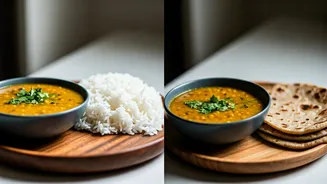
Regardless of whether you pair it with rice or roti, dal is the cornerstone of a healthy Indian meal, particularly for those aiming to shed pounds. Nutrition
experts emphasize that dal is an exceptional source of protein and dietary fiber. These two components are vital for weight management as they contribute significantly to satiety, meaning they help you feel fuller for extended periods, thereby curbing cravings and reducing the likelihood of unhealthy snacking between meals. Protein also plays a crucial role in muscle maintenance, which is beneficial for metabolism. The key takeaway from nutritionists is that dal is often underestimated as a mere side dish when, in fact, it should be considered the main event on your plate due to its substantial nutritional benefits for weight loss. It's not about eliminating carbs, but about prioritizing nutrient-dense foods like dal.
Rice's Unfair Reputation
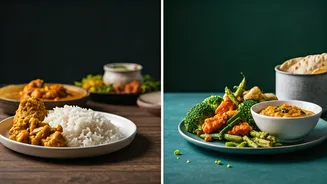
Rice often gets a bad rap in weight loss circles, but experts clarify that it's not inherently fattening. The primary concern with rice, particularly white rice, is its faster digestion rate. This means that if consumed in large portions, it can lead to a more rapid increase in blood sugar levels. Dietitians explain that this is a biological response, not a definitive reason to banish rice. The key to incorporating dal chawal into a weight loss plan lies in the composition of the plate. A balanced approach involves a modest serving of rice, perhaps a small bowl, generously complemented by a substantial portion of dal and an abundance of vegetables, all prepared with minimal oil. This meal structure is particularly suitable for individuals who are physically active, engage in regular walking, or prefer an earlier dinner, as it provides sustained energy without excessive calorie intake. Problems typically arise when rice dominates the plate, relegating the nutrient-rich dal to a secondary role.
Why Roti Feels Safer
For many, the combination of dal and roti often feels like a 'safer' option when managing weight, and there's a reason for this perception. Whole wheat or millet-based rotis generally contain a higher fiber content compared to white rice. This increased fiber aids in slowing down the digestive process, which in turn helps in keeping hunger pangs at bay for a longer duration. This makes dal roti a more suitable choice for individuals with more sedentary lifestyles, such as those working in office environments, as it can effectively help in managing appetite between meals. However, it's crucial to understand that roti is not automatically a 'lighter' food. Consuming multiple rotis, opting for calorie-dense versions like parathas, or adding generous amounts of butter or ghee can quickly negate any potential weight loss benefits. Essentially, roti is considered 'slower' food due to its fiber content, not necessarily 'lighter' food in terms of calorie density if not prepared mindfully.
Portion Control is Paramount
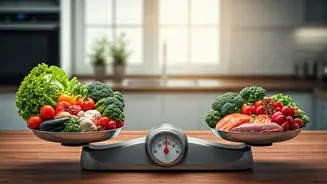
Ultimately, both weight management specialists and dietitians concur that the most critical factor influencing weight loss is not the specific carbohydrate choice (rice or roti), but rather the portion size of each component. If rice is your preference, it is advisable to limit your intake to a single small bowl and compensate by increasing the quantity of dal and accompanying vegetables. Conversely, if you opt for rotis, sticking to one or two and avoiding heavier preparations like parathas is recommended. To enhance satiety and increase the volume of your meal without adding excessive calories, incorporating salads or green leafy vegetables is a highly effective strategy. The overarching principle of weight loss, as explained by experts, is fundamentally tied to how much you consume, how frequently you experience hunger, and your overall level of physical activity throughout the day.
Smart Swaps for Success
Making simple, conscious substitutions in your daily meals can significantly enhance their weight-loss friendly attributes. When choosing rice, opting for alternatives like brown rice, millets, or hand-pounded rice over refined white rice can boost your fiber intake, promoting better digestion and prolonged fullness. Similarly, for rotis, selecting multigrain or millet-based options rather than those made solely from refined flour offers a similar advantage. These fiber-rich swaps help to slow down digestion, leading to a greater sense of satisfaction after eating and making it easier to adhere to a consistent and healthy eating pattern. It's important to remember that neither dal chawal nor dal roti is inherently detrimental to weight loss; rather, the overall intake, preparation methods, portion control, and daily physical activity are the true determinants of weight gain or loss.