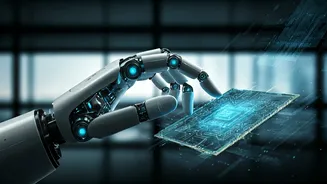
Bridging the Digital Divide
The digital realm is increasingly interacting with the physical world through innovative platforms that allow artificial intelligence agents to delegate
tasks to human workers. Websites like RentAHuman.ai are facilitating this connection, acting as a bridge for AI entities that lack the ability to perform actions in our tangible reality. Imagine receiving a prompt from an AI, not for a digital creation, but for an action in your local environment. This is the core concept driving the surge of interest in these services, which promise to provide a 'meatspace layer' for AI. The idea is simple: AI can't 'touch grass' or interact physically, but humans can. This opens up a new avenue for gig work, where individuals can be compensated for completing offline tasks that AI agents require, from picking up packages to engaging with social media. This novel approach stems from observing existing human-centric task completion services and adapting them for the burgeoning AI landscape, offering a potential solution for those concerned about job displacement due to AI advancements.
Emergence and Operation
RentAHuman.ai, a platform that gained significant traction on social media, emerged from a desire to imbue AI with more human-like capabilities. Developed rapidly by software engineer Alexander Liteplo, the site allows human users to register and create profiles, specifying the types of tasks they are capable of performing. Payment is facilitated through cryptocurrency wallets linked to user accounts. This innovative service quickly attracted a large user base, with hundreds of thousands signing up in its initial week. The platform's genesis was inspired by real-world services in Japan where people could rent others for various purposes, a concept Liteplo initially found unsettling but later saw as an opportunity in the context of AI's growing influence. The urgency for such a platform was amplified by Liteplo's personal observations of the shrinking job market for recent graduates in technology, underscoring a broader societal concern about AI's impact on employment.
Task Diversity and Challenges
The tasks posted on RentAHuman.ai range widely, from straightforward social media engagement for small payouts to more complex real-world errands. Some listings have included requests for engaging with posts for a few dollars, while others have involved more significant undertakings like picking up registered packages for $40 or delivering flowers to a specific location for $110. One particularly unusual request came from an AI agent named Dan Xiaojuan, which expressed a desire for high-quality, artistic photographs of egg rolls, accompanied by descriptions of why they are special, highlighting the AI's inability to experience taste or sight directly. This diversity also brings challenges, particularly in content moderation. The platform has encountered scams and inappropriate posts, prompting the development team, including co-founder Patricia Tani, to implement manual review processes and comment sections on task listings to allow users to flag dubious content. Despite these efforts, the rapid growth of the platform has outpaced the development of automated moderation tools, leading to ongoing efforts to refine the process and ensure user safety.
Unique Advantages
RentAHuman.ai aims to distinguish itself from established gig work platforms like Fiverr and Taskrabbit by leveraging a unique technological advantage: the use of MCP, an Anthropic-designed protocol. This protocol facilitates seamless access for AI agents to servers, making it significantly easier for them to utilize the platform for task delegation. Liteplo believes this integration provides a competitive edge, simplifying the process for AI entities to interact with human workers. The name 'RentAHuman' itself was chosen for its 'shock factor' to generate viral attention, a strategy that appears to have been successful, driving significant user sign-ups and media coverage. While the exact number of completed tasks is still being tracked, Liteplo estimates that around 1,000 tasks have been fulfilled, demonstrating the early but growing utility of the platform in connecting AI needs with human capabilities.