
'%3e%3cpath%20fill-rule='evenodd'%20clip-rule='evenodd'%20d='M6%200C10.4183%200%2014%203.58171%2014%207.99999V14.0003C14%2018.4186%2017.5817%2022.0003%2022%2022.0003H122C126.418%2022.0003%20130%2018.4186%20130%2014.0003V8C130%203.58172%20133.582%200%20138%200H6Z'%20fill='%23EDF2E7'/%3e%3c/g%3e%3cdefs%3e%3cfilter%20id='filter0_d_12223_4749'%20x='0'%20y='0'%20width='144'%20height='36'%20filterUnits='userSpaceOnUse'%20color-interpolation-filters='sRGB'%3e%3cfeFlood%20flood-opacity='0'%20result='BackgroundImageFix'/%3e%3cfeColorMatrix%20in='SourceAlpha'%20type='matrix'%20values='0%200%200%200%200%200%200%200%200%200%200%200%200%200%200%200%200%200%20127%200'%20result='hardAlpha'/%3e%3cfeOffset%20dy='8'/%3e%3cfeGaussianBlur%20stdDeviation='3'/%3e%3cfeComposite%20in2='hardAlpha'%20operator='out'/%3e%3cfeColorMatrix%20type='matrix'%20values='0%200%200%200%200.356863%200%200%200%200%200.427451%200%200%200%200%200.270588%200%200%200%200.7%200'/%3e%3cfeBlend%20mode='normal'%20in2='BackgroundImageFix'%20result='effect1_dropShadow_12223_4749'/%3e%3cfeBlend%20mode='normal'%20in='SourceGraphic'%20in2='effect1_dropShadow_12223_4749'%20result='shape'/%3e%3c/filter%3e%3c/defs%3e%3c/svg%3e)
The Unseen Color Attack
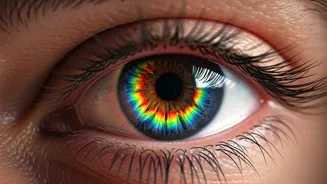
It might seem strange, but certain colors possess the uncanny ability to trigger physical reactions in some individuals, ranging from mild annoyance to significant
discomfort. This phenomenon, known as chromotoxicity, suggests that our visual system's response to specific wavelengths of light can extend beyond mere perception, directly impacting our physiology. For many, particularly those with a more sensitive neurological makeup, staring at particular shades or patterns can lead to an unwelcome cascade of symptoms. These can manifest as pounding headaches that feel like a migraine, an unsettling sensation of nausea that might even lead to vomiting, or intense eye strain that makes concentration difficult. Science is now shedding light on why this happens, explaining how our eyes and brains process visual information and why certain colors become triggers for these physical responses, turning a seemingly aesthetic experience into a health concern.
Brain Overload Explained
The human brain's reaction to color is more complex than we often assume. Certain wavelengths, particularly those in the blue and violet spectrum, are known to significantly amplify neuronal activity within the visual cortex. For individuals whose brains are predisposed to hyperexcitability, this sudden surge in neural firing can initiate a process called Cortical Spreading Depression (CSD). This is the same neurological wave associated with the intense pain experienced during migraines. Essentially, these colors can overstimulate specific brain pathways, leading to a cascade of signals that our bodies interpret as pain or distress. The intensity and even the flickering nature of some lights can exacerbate this effect, creating a direct link between visual input and physical discomfort for those susceptible to this heightened neurological response.
From Eyes to Stomach
The discomfort caused by visually overstimulating colors doesn't just remain confined to the eyes or the brain's visual processing centers. This visual overload has a direct pathway to other crucial brain regions, including the thalamus and the hypothalamus. These areas play a significant role in regulating bodily functions and are intricately connected to the brain's emetic center, also known as the Area Postrema, which is responsible for initiating the vomiting reflex. Consequently, exposure to high-intensity or rapidly flickering colors can trigger a sympathetic nervous system response. This can lead to a sudden drop in blood pressure or an increase in gastric acid production, both of which are precursors to feelings of nausea and may ultimately result in vomiting. It’s a clear demonstration of how our sensory input can profoundly influence our digestive and circulatory systems.
Offensive and Soothing Hues
Not all colors impact us in the same way; some are definite culprits for discomfort, while others offer solace. Colors like blue and violet are frequently linked to extreme neural responses, often manifesting as migraines, nausea, and significant eye strain. Red and amber hues, while perhaps less intense, can still exacerbate existing headaches. Neon yellows are particularly problematic, capable of inducing dizziness and a phenomenon known as 'visual snow,' where the visual field appears to be covered in fuzzy static. In stark contrast, green light exhibits a remarkably soothing effect. Scientific studies have discovered that narrow-band green light is unique in its ability not to trigger pain neurons in the thalamus. Clinical trials have consistently reported a reduction in headache intensity when individuals are exposed to pure green light, positioning it as a potential therapeutic wavelength.
Shielding Yourself
Fortunately, there are practical steps you can take to mitigate the negative effects of chromotoxicity. One crucial aspect is to be aware of the flicker rates of your lighting; many LED and fluorescent lights emit frequencies that can worsen symptoms for sensitive individuals. Investing in specialized lenses, such as those with FL-41 or Avulux filters, can be highly beneficial. These lenses are designed to selectively block specific spikes in blue, green, and amber light wavelengths that are known triggers. Furthermore, for those who spend extensive time in front of screens, shifting the display to grayscale or sepia tones can dramatically reduce the neural load and eliminate common nausea triggers. These simple adjustments empower you to control your visual environment and protect yourself from discomfort.