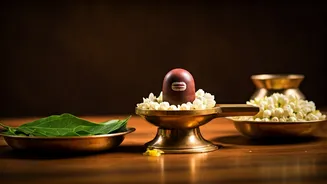
Panchamrit's Sacred Blend
As Maha Shivaratri dawns on February 15, 2026, a key ritual involves Panchamrit, a divine concoction crucial for Lord Shiva's worship. This sacred mixture
is crafted from five essential elements: pure milk, creamy curd, golden honey, clarified ghee, and sweet sugar. Each component is imbued with symbolic meaning, reflecting qualities desired in spiritual practice. Milk signifies profound calmness and serenity, while curd represents abundance and prosperity. Honey adds the sweetness of devotion and pleasant interactions, ghee bestows strength and resilience, and sugar embodies unadulterated bliss and joy. During the 'abhishekam' ritual, Panchamrit is reverently poured over the Shivling, symbolizing purification and divine blessings. Afterward, this sacred liquid is distributed as 'prasad,' allowing devotees to partake in its spiritual essence and the balanced energy it represents, fostering a deeper connection with Lord Shiva.
Simplicity: Milk & Water
Lord Shiva, an ascetic deity, is deeply associated with purity and simplicity, making milk and water the most cherished offerings. Milk, a symbol of pristine sanctity and cooling spiritual energy, is believed to pacify the divine presence and promote inner calm. Water, on the other hand, represents cleansing, renewal, and the washing away of impurities, both physical and spiritual. The ritualistic pouring of milk and water over the Shivling during Maha Shivaratri is a fundamental act of devotion. These elemental offerings underscore Shiva's ascetic lifestyle and his serene, detached nature. They serve as a powerful reminder to devotees of the importance of purity, humility, and inner peace in their spiritual journey, forming the bedrock of the festival's devotional practices.
Nourishment: Fruits & Nuts
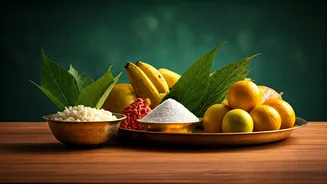
On the sacred night of Maha Shivaratri, the offering of fresh fruits and dried fruits to Lord Shiva signifies nature's bounty and life's vibrant energy. Naturally sweet fruits like ripe bananas and crisp apples, along with other seasonal produce, are presented as tokens of gratitude for sustenance and vitality. Complementing these are dry fruits such as almonds, cashews, and raisins, which symbolize enduring strength, resilience, and fortitude. These offerings are perfectly aligned with the tradition of fasting observed during the festival. Their light, sattvic (pure and balanced) nature provides essential energy, enabling devotees to remain vigilant and focused throughout the night of prayers and contemplation, supporting their spiritual discipline without burdening the body.
Beloved Bael Offerings
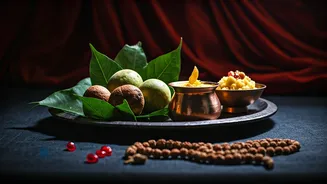
Central to Maha Shivaratri worship is the reverence for the bael tree, with its leaves and fruit holding profound significance for Lord Shiva. The bel leaf, or 'bilva patra,' is considered his absolute favorite offering. Each leaf typically features three distinct leaflets, which are symbolic representations of Lord Shiva’s divine trident (Trishul) and also signify the fundamental cosmic principles of creation, preservation, and destruction. Beyond the leaves, the bael fruit itself is offered, representing the soul and the deep devotion of the worshipper. These sacred items are not merely symbolic; they are considered integral to the Maha Shivaratri rituals, believed to bestow Lord Shiva’s abundant blessings upon those who offer them with utmost sincerity and a pure heart.
Refreshing Thandai Drink
Thandai emerges as a special, refreshing beverage deeply associated with Lord Shiva, particularly during festivals like Maha Shivaratri. This cooling drink is traditionally prepared using a base of wholesome milk, enriched with a blend of invigorating nuts, and fragrant spices such as fennel seeds and cardamom. Its composition makes it inherently sattvic, perfectly complementing the ascetic and tranquil energy attributed to Lord Shiva. During Maha Shivaratri celebrations in 2026, Thandai is frequently prepared as 'prasad,' offering devotees a dual benefit: it provides essential nourishment, especially for those observing long fasts, and carries profound spiritual symbolism. The act of sharing Thandai fosters a sense of community and shared devotion.
Comforting Kheer Pudding
Kheer, a beloved rice pudding prepared from a simple yet delightful combination of milk, rice, and sugar, stands as another prominent food offering for Lord Shiva during Maha Shivaratri. Its inherent natural sweetness and uncomplicated preparation align perfectly with the deity's preference for humble, unadorned sustenance over lavish feasts. The act of preparing and offering Kheer reflects devotion rooted in simplicity and purity. Often, after the sacred rituals conclude, Kheer is distributed among devotees as 'prasad,' strengthening the sense of community and shared spiritual experience. This communal sharing reinforces the collective spirit of Maha Shivaratri, where devotion is celebrated together.
Energizing Nuts & Seeds
The inclusion of nuts and seeds, such as sesame and peanuts, in the Maha Shivaratri offerings carries symbolic weight, representing strength, vitality, and the concept of fertility. These wholesome items are also exceptionally well-suited for fasting traditions, providing sustained energy that is crucial for devotees undertaking a night-long vigil of prayers and meditation. Their inclusion in the bhog reflects the multifaceted nature of Lord Shiva, who is revered as both a supreme ascetic and a householder. Thus, these offerings embody a harmonious balance between renunciation and the provision of essential sustenance, mirroring the divine equilibrium that Shiva embodies.
Pure Sattvic Sweets
During Maha Shivaratri, the emphasis on 'sattvic' sweets highlights the festival's focus on purity and moderation, steering clear of overly rich or complex desserts. These light confections are typically crafted from wholesome ingredients such as jaggery, fresh coconut, or simple grains. Unlike the elaborate sweets often found during other festive occasions, these sattvic preparations underscore the spiritual essence of Maha Shivaratri. They serve as a gentle reminder to devotees that the primary purpose of the festival is the cultivation of deep devotion, spiritual discipline, and inner focus, rather than mere indulgence in culinary delights. The simplicity of these sweets mirrors the ascetic nature of Lord Shiva himself.