What is Pallof Press?
The half-kneeling Pallof press is a specialized core strengthening movement designed to combat rotational forces, a common detriment to maximal effort
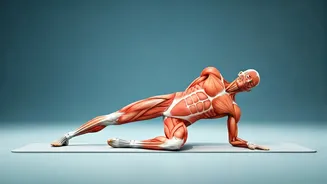
in heavy compound exercises like squats, deadlifts, and overhead presses. Unlike dynamic rotational exercises that can mask underlying weaknesses, the Pallof press actively trains your torso and hips to maintain a rigid, stable position against an external force attempting to twist you. When performed from a half-kneeling stance, with one knee on the ground and the opposite foot planted firmly forward, your base of support is intentionally narrowed. This setup amplifies the demand on your core muscles, including your obliques and anterior abdominal wall, to resist lateral displacement and rotation. The objective is to keep your trunk perfectly aligned, with your ribs stacked over your hips, as you extend a resistance band or cable handle away from your chest. If your body shifts, twists, or leans excessively during the movement, you are not effectively training the anti-rotational capacity that is crucial for efficient force transfer during heavy lifting.
Executing the Press
To effectively perform the half-kneeling Pallof press, precise setup and execution are paramount. Begin by anchoring a resistance band or cable at waist height. Adopt a kneeling position where the knee closest to the anchor point is down, and the opposite foot is placed forward, ensuring your forward knee is directly above your ankle and your forward hip is above your knee. Crucially, square your hips and shoulders, maintaining an upright posture. Engage your glutes and actively pull your ribs down, ensuring they are vertically aligned with your hips to prevent anterior pelvic tilt. Hold the handle or band with both hands at chest level, taking an inhale while bracing your core and relaxing your shoulders away from your ears. Press the handle directly forward, away from your chest, extending your arms fully while resisting any urge to twist, lean, or drift towards the anchor point. Hold briefly at the lockout position, then slowly and controlledly return the handle to your chest. This deliberate control is what builds strength and stability.
Signs of Proper Form
Confirming you're executing the half-kneeling Pallof press correctly is key to unlocking its benefits. Visually, your torso should remain tall and uniformly square throughout the entire movement, with no discernible twisting or leaning of your hips or shoulders towards or away from the resistance source. You should experience a consistent, deep tension across your entire core, encompassing your obliques and the front of your abdomen, alongside significant engagement in your glutes to maintain hip stability. A feeling of substantial effort to stay balanced is a positive indicator. Internally, you should perceive a strong stabilizing force around your spine and a persistent tension in your gluteal muscles, crucial for keeping your pelvis properly aligned. If observing yourself in a mirror, your chest should consistently face forward, the handle should move in a perfectly straight line, and your ears should remain stacked directly over your shoulders, signifying optimal core engagement.
Why it Boosts Lifts
The half-kneeling Pallof press significantly enhances your performance in foundational lifts by directly addressing a hidden weakness: anti-rotational strength. When you lift heavy weights, your body naturally tries to compensate for asymmetrical forces or imbalances by rotating or shifting. This 'energy leak' diminishes the power you can effectively transfer into the lift. The Pallof press trains your core to act as a solid, unwavering pillar, preventing this leakage. It reinforces your ability to brace your core effectively even when faced with asymmetrical loading conditions, which are common in exercises like the deadlift where grip strength might differ or during squats where minor stance adjustments occur. A stable torso translates directly to more efficient movement patterns: your squats will be more centered, your deadlifts will track straighter, and your overhead presses will remain vertical, thus allowing you to lift more weight with greater control and reduced risk of injury.
Avoiding Common Errors
Several common pitfalls can undermine the effectiveness of the half-kneeling Pallof press, turning a potent core exercise into a less beneficial movement. One frequent mistake is using excessive weight, which causes you to be pulled out of position, turning it into an ego-driven strength exercise rather than a focused anti-rotation drill. The fix is simple: reduce the load until you can comfortably press and hold the weight without any torso rotation or leaning. Another error is allowing the press to deviate from a straight line, which shifts the primary stress to the shoulders and reduces core demand. Ensure the handle travels straight out from your sternum, envisioning a punch through the air. Failing to maintain proper posture, specifically by not keeping your ribs stacked over your hips, transfers tension to your lower back instead of your anterior core and obliques. This is rectified by squeezing your glutes, keeping your ribs down, and maintaining a tall posture. Finally, improper setup, such as hyperextending the lower back or leaning excessively to maintain balance, negates the exercise's purpose. Always ensure your half-kneeling stance is biomechanically sound, with ankles under knees and knees under hips, to keep your hips and shoulders square throughout.
Integrating into Training
To maximize the benefits of the half-kneeling Pallof press, it should be integrated strategically into your training regimen, treated as a skill-building exercise rather than mere filler. Incorporate it into your warm-up routine to prepare your core and grooved bracing patterns before engaging in heavy compound lifts like squats, deadlifts, or presses. Alternatively, it can be effectively used as an accessory movement, paired with major lifts in a superset to reinforce anti-rotational stability without unduly taxing your nervous system. For example, you could perform Barbell Overhead Press followed immediately by the Half-Kneeling Pallof Press for 8 repetitions on each side. For sets and repetitions, beginners can start with 2-3 sets of 8 reps per side, intermediates can progress to 3 sets of 10 reps with a slower tempo, and advanced individuals can aim for 3 sets of 12+ reps per side, incorporating isometric holds at full extension. Aim for 45-60 seconds of rest between sides and sets. Practicing this exercise a few times weekly will lead to noticeable improvements in the smoothness and control of your heavier lifts.