
'%3e%3cpath%20fill-rule='evenodd'%20clip-rule='evenodd'%20d='M6%200C10.4183%200%2014%203.58171%2014%207.99999V14.0003C14%2018.4186%2017.5817%2022.0003%2022%2022.0003H122C126.418%2022.0003%20130%2018.4186%20130%2014.0003V8C130%203.58172%20133.582%200%20138%200H6Z'%20fill='%23EDF2E7'/%3e%3c/g%3e%3cdefs%3e%3cfilter%20id='filter0_d_12223_4749'%20x='0'%20y='0'%20width='144'%20height='36'%20filterUnits='userSpaceOnUse'%20color-interpolation-filters='sRGB'%3e%3cfeFlood%20flood-opacity='0'%20result='BackgroundImageFix'/%3e%3cfeColorMatrix%20in='SourceAlpha'%20type='matrix'%20values='0%200%200%200%200%200%200%200%200%200%200%200%200%200%200%200%200%200%20127%200'%20result='hardAlpha'/%3e%3cfeOffset%20dy='8'/%3e%3cfeGaussianBlur%20stdDeviation='3'/%3e%3cfeComposite%20in2='hardAlpha'%20operator='out'/%3e%3cfeColorMatrix%20type='matrix'%20values='0%200%200%200%200.356863%200%200%200%200%200.427451%200%200%200%200%200.270588%200%200%200%200.7%200'/%3e%3cfeBlend%20mode='normal'%20in2='BackgroundImageFix'%20result='effect1_dropShadow_12223_4749'/%3e%3cfeBlend%20mode='normal'%20in='SourceGraphic'%20in2='effect1_dropShadow_12223_4749'%20result='shape'/%3e%3c/filter%3e%3c/defs%3e%3c/svg%3e)
Dietary Overrides Effort
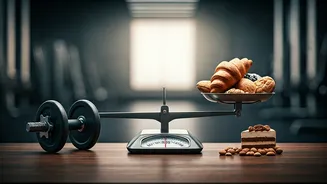
A frequent reason for hitting a weight loss wall, despite a rigorous exercise routine, is often found in what we consume. It's remarkably easy to inadvertently
undo the calorie deficit created by a workout by overindulging in food or beverages. Many individuals underestimate the calorie content of their meals or snacks, especially post-exercise when hunger pangs can be amplified. For example, a healthy-seeming salad might be loaded with high-calorie dressings, or a post-run smoothie could contain a significant amount of sugar. Experts emphasize that 'you can't outrun a bad diet.' This means that even if you're burning hundreds of calories during a workout, consuming an extra few hundred in compensatory eating can negate all your efforts. Understanding portion sizes and making conscious, nutritious food choices are paramount. It's not about deprivation, but about making smart substitutions and being mindful of total daily caloric intake versus expenditure.
Inadequate Intensity
The frequency of your workouts is only one piece of the puzzle; the intensity at which you perform them also plays a critical role in weight loss. Simply going through the motions for an extended period might not be challenging your body enough to stimulate significant calorie burn and metabolic adaptation. If your daily routine has become too comfortable, your body may have adapted to the current level of exertion, leading to a plateau. Incorporating High-Intensity Interval Training (HIIT) or increasing the duration and resistance of your sessions can provide a necessary shock to your system. For instance, alternating short bursts of maximum effort with brief recovery periods can elevate your metabolism for hours after the workout has concluded. Alternatively, progressively increasing the weights you lift or the speed at which you run can ensure you're continuously pushing your limits and encouraging sustained fat loss.
Recovery is Key
While daily workouts seem dedicated, insufficient rest and recovery can paradoxically hinder weight loss. Overtraining can lead to elevated cortisol levels, a stress hormone that promotes fat storage, particularly around the abdomen. When your body is constantly in a state of stress due to relentless exercise without adequate downtime, it can negatively impact hormone balance, sleep quality, and muscle repair. This disruption can make it harder for your body to efficiently burn fat and can even lead to increased cravings for unhealthy foods. Experts recommend incorporating active recovery days, such as light walking or stretching, and ensuring you get sufficient sleep each night. Listening to your body and allowing it time to repair and rebuild is as crucial as the workout itself for achieving sustainable weight management results.
Underlying Health Factors
Sometimes, the reasons behind a stalled weight loss journey extend beyond diet and exercise alone. Certain underlying health conditions or hormonal imbalances can significantly impede your body's ability to shed excess weight, even with diligent effort. For example, thyroid issues can slow down metabolism, making fat burning a more challenging task. Similarly, conditions like Polycystic Ovary Syndrome (PCOS) can affect hormonal regulation, contributing to weight gain or difficulty losing weight. Medications taken for various ailments can also have side effects that impact metabolism or appetite. If you've consistently followed a healthy diet and exercise plan without seeing results, consulting with a healthcare professional is a vital step to rule out any medical contributors and develop a tailored approach to your weight management goals.