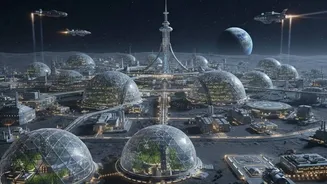
Lunar Leap Forward
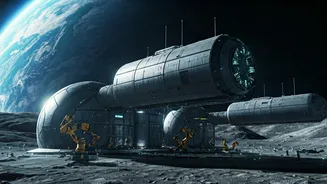
Elon Musk, known for his ambitious visions, has reportedly outlined a groundbreaking plan for his AI venture, xAI, to potentially establish a manufacturing
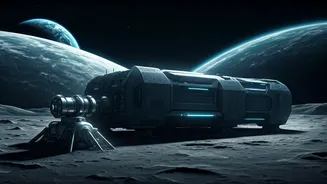
facility on the moon. This facility would be dedicated to producing AI-powered satellites. Adding to the lunar-centric strategy, Musk also proposed the construction of a massive electromagnetic mass driver, essentially a sophisticated space catapult, to efficiently launch these satellites into orbit. This significant pivot suggests a strategic re-evaluation of long-term goals, with a newfound emphasis on lunar settlement as a more immediate objective compared to previous aspirations for Mars. The rationale behind this lunar focus, as reported, stems from a belief in the necessity of establishing a presence on the moon for future technological and civilizational expansion.
SpaceX's Shifting Focus
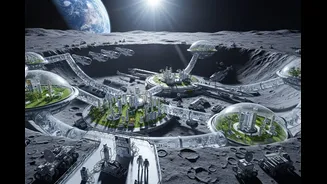
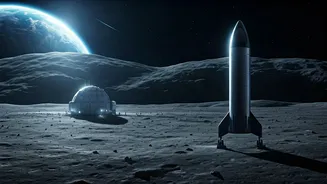
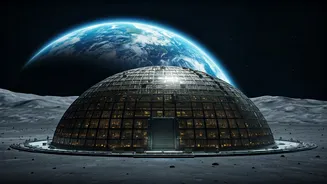
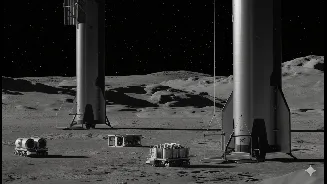
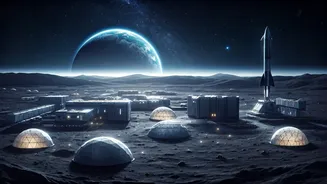
The recent discussions within Musk's network of companies highlight a substantial shift in priorities, particularly concerning SpaceX. Reports indicate that SpaceX has redirected its primary focus towards the development of a self-sustaining city on the moon, with an ambitious timeline suggesting this could be realized in under a decade. This contrasts sharply with the significantly longer timeframe, over twenty years, estimated for establishing a similar city on Mars. While the overarching mission of SpaceX—to expand consciousness and life to the stars—remains consistent, the practical roadmap has evidently been redrawn. The moon has now become the foreground for immediate construction efforts, even as Mars continues to be the ultimate aspirational destination for humanity's multi-planetary future. This strategic adjustment marks a notable departure from Musk's earlier, pronounced focus on reaching the red planet.
The Mass Driver Concept
A particularly intriguing and technically grounded element of Musk's lunar proposal is the concept of a mass driver. This device is fundamentally an electromagnetic launcher, designed as an exceptionally long and powerful track capable of accelerating payloads to immense velocities. By harnessing electromagnetic forces, it can effectively hurl objects into space. The moon presents an ideal location for such a system due to its negligible atmosphere and significantly lower gravitational pull, factors that substantially enhance the feasibility of this technology compared to Earth-based implementations. The mass driver concept itself is not new, having been a subject of serious consideration within professional space engineering circles for many years, recognized for its potential to revolutionize orbital launch capabilities.
Defining Lunar Industry
The precise nature of the proposed "factory on the moon" remains somewhat abstract, with interpretations varying widely. On one end of the spectrum, it could signify a modest assembly facility reliant on components transported from Earth. However, the more profound implication, aligning with the vision of a "self-growing city," suggests a comprehensive industrial ecosystem. This would encompass the entire lifecycle of resource utilization: mining lunar materials, refining them, manufacturing new components, undertaking repairs, and facilitating self-expansion. Such an endeavor transcends a mere project plan; it represents the nascent stages of a new branch of civilization, demanding robust power generation, reliable life support systems, built-in redundancy, and the practical, unglamorous necessity of maintaining and fixing equipment when the closest supply chain is an astronomical distance away. The challenge lies in creating a truly self-sufficient industrial base on an alien world.
X's User Ambitions
Alongside the lunar ambitions, the same internal meeting reportedly addressed the future of the X platform (formerly Twitter). Musk articulated a goal of surpassing one billion daily active users, a significant increase from its current reported figures. He indicated that the platform currently engages approximately 600 million monthly active users and envisions a future expanded by integrated payment systems and other services. However, independent analyses present a more conservative picture of X's current daily reach. Data from sources like Similarweb suggests a global daily user base closer to 125 million on mobile and around 145.4 million via web browsers, with a total daily active user count exceeding 270 million. This disparity highlights the ambitious targets set for user growth and platform development.
A Cohesive Grand Vision
When considering all these elements together—the lunar factory, the mass driver, the self-growing lunar city, and the ambitious user growth targets for X—a clear and characteristic vision emerges from Musk's proposals. It paints a picture where the primary obstacles to scaling advanced technologies, particularly AI, might be overcome by relocating critical infrastructure to the moon. This strategy suggests that if earthly constraints or regulations become impediments, the solution could involve establishing these operations in a celestial location. It’s a bold, interconnected strategy that embodies Musk’s signature approach to problem-solving: tackling the most complex challenges with audacious, far-reaching plans, where the primary hurdle to monumental progress might ultimately be a matter of lunar zoning and resource availability.