Crafting the Ideal Dough
Achieving the perfect poori starts with a well-prepared dough, a crucial foundation for that satisfying puff. Begin by meticulously sifting your chosen
flour, whether it's fine refined flour or wholesome whole wheat flour. This step is vital for eliminating any lumps, ensuring a smooth and uniform base that will yield elastic dough. Next, incorporate a tiny pinch of salt, which enhances flavour, and a touch of oil. Mix these dry ingredients thoroughly before gradually introducing water. The key lies in kneading the dough to a balanced consistency – it shouldn't be overly soft, nor should it be too hard. A dough that is just right will have excellent elasticity, a property absolutely necessary for the poori to puff up beautifully during frying. Once kneaded, cover the dough with a damp cloth or a lid and allow it to rest for a short period. This resting phase helps in gluten development, making the dough more pliable and easier to work with for rolling.
Shaping and Frying Techniques
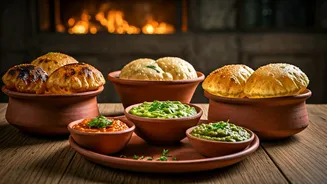
Once your dough has achieved the perfect texture and rested sufficiently, it's time to shape and fry. Divide the dough into small, equal portions. Roll each portion into smooth, uniformly round shapes. It's important that the rolled pooris are of consistent thickness; uneven rolling can lead to inconsistent puffing. Now, prepare for frying. Heat a generous amount of oil in a deep pan or kadai over medium heat. To gauge if the oil is at the correct temperature, a simple test works wonders: drop a tiny piece of dough into the hot oil. If it sizzles immediately and floats to the surface quickly, the oil is perfectly heated for frying your pooris. Carefully slide one rolled poori at a time into the hot oil. As it begins to cook and puff, gently press it down with the back of a slotted spoon. This gentle pressure aids in an even puff. Avoid frying at extremely high temperatures, as this will cause the poori to brown too rapidly before it has a chance to puff fully, resulting in a burnt exterior and uncooked interior. Conversely, frying at too low a temperature will not generate enough heat to make the poori puff, leaving it flat, oily, and dense. Maintaining a consistent, medium-high heat is the secret to that delightful, airy texture and golden-brown finish.