Ancient Utility Elevated
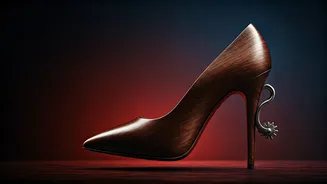
The high heel's story begins not on runways, but on horseback. In 15th-century Persia, cavalrymen wore heels to anchor their feet securely in stirrups,
a crucial functional advantage for combat. This practical design was the genesis of what would later influence the iconic cowboy boot. As this concept traveled to Europe, its purpose began a slow metamorphosis. In Spain, women adopted elevated chopines made of cork or wood, primarily to keep their feet from the muck of unpaved streets. When these styles, particularly through Persian influence, reached Venice, the platforms grew dramatically in height, often adorned with opulent fabrics like velvet. This added height didn't just keep feet clean; it also naturally slowed a wearer's gait, transforming walking into a more deliberate, conspicuous display of presence. European aristocrats, notably men, soon embraced these heels as undeniable markers of their considerable wealth and elevated social standing, signifying a life removed from the drudgery of manual labor.
Status Symbol of the Elite
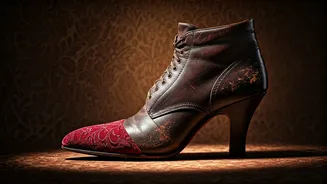
The impracticality of early heels soon became their most significant feature, directly equating to privilege. Medieval pattens, which were essentially wooden overshoes, served to lift wearers above the unsanitary conditions of the streets, a clear indicator of their elevated status. Similarly, high heels suggested a lifestyle free from the necessity of manual labor, often implying the wearer was transported by servants or carriages. The greater the height, the more irrefutable the proof of their status. This concept of elevated footwear wasn't confined to Europe. Across the globe, similar ideas of height and cultural expression were taking shape. Japan developed wooden footwear like geta and lacquered okobo, which transformed everyday movement into a rhythmic auditory experience and a form of ceremonial display. In the Ottoman Empire, kabkabs combined the practical function of raised sandals, often used in bathhouses, with intricate ornamentation. These diverse global examples illustrate how different cultures independently explored the potential of elevated footwear as a powerful vehicle for cultural expression and social distinction.
Royal Power and Innovation
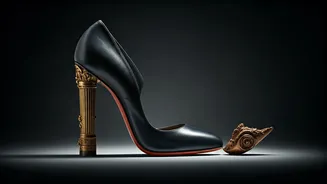
By the 17th century, the high heel had firmly cemented its association with dominance and authority. Louis XIV of France was a prominent proponent, famously sporting four-inch heels and reserving the distinctive red sole for members of his court. This strategic use of footwear created a visual hierarchy, immediately signaling one's proximity to royal power. The true revolution in heel construction, however, arrived in the 1850s with the introduction of the steel shank. This innovation fundamentally changed shoemaking, allowing for much greater height to be achieved while simultaneously providing essential stability and support. This breakthrough paved the way for the development of the slender heels and the avant-garde stilettos that would define footwear in later decades. The 20th century saw further experimentation and refinement. In the 1940s, designers like Salvatore Ferragamo explored the possibilities of lightweight materials, experimenting with cork wedges and even transparent sandals that played with notions of balance and illusion. Then, in 1954, Roger Vivier introduced the modern stiletto, a design that masterfully merged cutting-edge engineering with unparalleled elegance, forever changing the silhouette of women's footwear.
Performance and Identity
The 1970s witnessed a vibrant resurgence of platform heels, fueled by the energetic aesthetics of glam rock, the pulsating rhythms of disco, and the expressive freedom of queer nightlife. In these cultural spheres, increased height became a powerful tool for theatrical self-presentation and a bold declaration of identity. This era demonstrated how heels could transcend mere fashion and become integral to performance and personal narrative. Moving into the 21st century, the high heel continued its evolution as a sophisticated cultural signifier. The iconic red sole introduced by Christian Louboutin in the 2000s transformed the heel into a mark of understated luxury. The color alone became instantly recognizable, conveying status without the need for overt branding. Simultaneously, the Margiela Tabi heel, inspired by Japanese workwear and first seen in 1989, experienced a cult revival in the 2010s. It evolved into a symbol of fashion discernment and an insider's language, appreciated by those who understood its unique design narrative. Alexander McQueen's dramatic Armadillo boots in 2010 pushed the boundaries of heel design further, transforming them from footwear into wearable sculptures that bordered on the posthuman. Adopted famously by Lady Gaga, these designs highlighted fashion's embrace of spectacle and radical transformation. More recently, designers like those at Prada and Miu Miu, from the 1990s through to the 2020s, have played with heels using industrial geometry and exaggerated proportions. These collections have reframed contemporary femininity, presenting it as multifaceted, ironic, and self-aware, demonstrating the enduring power of the high heel to communicate complex ideas through form and style.